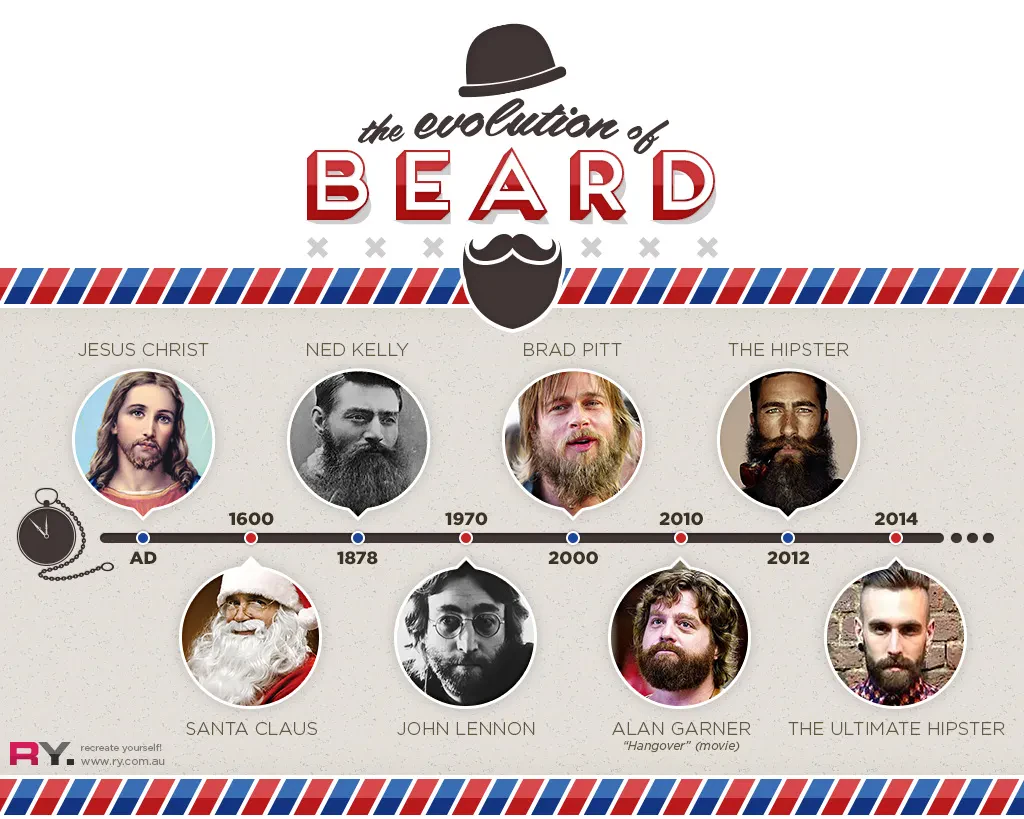
Let’s face it, beards have been around for a long, long time. Way longer than your favorite pair of jeans, that’s for sure. Think back to our caveman ancestors – chances are, they sported some pretty impressive facial fuzz. It wasn’t just for warmth; beards held symbolic meaning, representing masculinity, wisdom, and even social status.

Ancient civilizations like the Egyptians, Greeks, and Romans all had their own unique beard styles and traditions. Think about the powerful pharaohs of Egypt, often depicted with neatly trimmed or elaborately braided beards. Their beards weren’t just a fashion statement; they were a symbol of their divine authority and connection to the gods.

In ancient Greece, beards were also highly valued, especially among philosophers and elders. A full, flowing beard represented wisdom, maturity, and intellectual prowess. However, soldiers often shaved their faces for practical reasons – to prevent enemies from grabbing hold during combat.
The Romans had a more varied approach. Sometimes beards were in vogue, other times they weren’t. It really depended on the current emperor’s preferences and the prevailing social trends. Emperor Hadrian, for instance, was known for his magnificent beard, which he meticulously groomed.

Fast forward to the Middle Ages, and beards once again became a symbol of masculinity and social standing. Knights and nobles sported impressive beards, showcasing their strength and power. In some cultures, a long beard was even seen as a sign of piety and holiness.
Then came the Renaissance, a period of great artistic and intellectual flourishing. Beards continued to be popular, often styled in elaborate and artistic ways. Think swirling curls and meticulously trimmed shapes – a far cry from the rugged beards of the Middle Ages.

However, the pendulum swung again in the 17th and 18th centuries. Clean-shaven faces became fashionable in Europe, largely due to the influence of monarchs and the military. This trend persisted for several centuries. Beards were sometimes associated with rebelliousness or even unkemptness.
But beards roared back into popularity in the late 19th and early 20th centuries, particularly among artists, writers, and intellectuals. Think of iconic figures like Mark Twain and Abraham Lincoln; their beards became part of their public image.

The mid-20th century saw a decline in beard popularity once more, largely due to the popularity of clean-shaven looks favored in military and corporate settings. But, as with many fashion trends, this shift was temporary.
And now, in 2024, we’re in the midst of another beard boom! Beards are back, baby! With a vast array of styles, from the full, lumberjack beard to the neatly trimmed goatee, beards are a significant part of modern men’s fashion. This revival reflects a broader acceptance of diverse forms of masculinity and personal expression.
Popular Beard Styles in 2024
- Full Beard
- Goatee
- Short Boxed Beard
- Circle Beard
- Van Dyke
- Balbo
- Anchor Beard
From ancient symbols of power to modern expressions of individuality, beards have consistently played a significant role in shaping male identity across cultures and throughout history. Whether you rock a full beard or prefer a clean-shaven look, understanding the rich history of facial hair adds another layer of appreciation to this timeless aspect of human style.

So, the next time you admire a well-groomed beard, remember the long and fascinating journey it’s taken to arrive at its current, stylish status. It’s more than just facial hair; it’s a testament to the ever-evolving narrative of men’s style and self-expression.