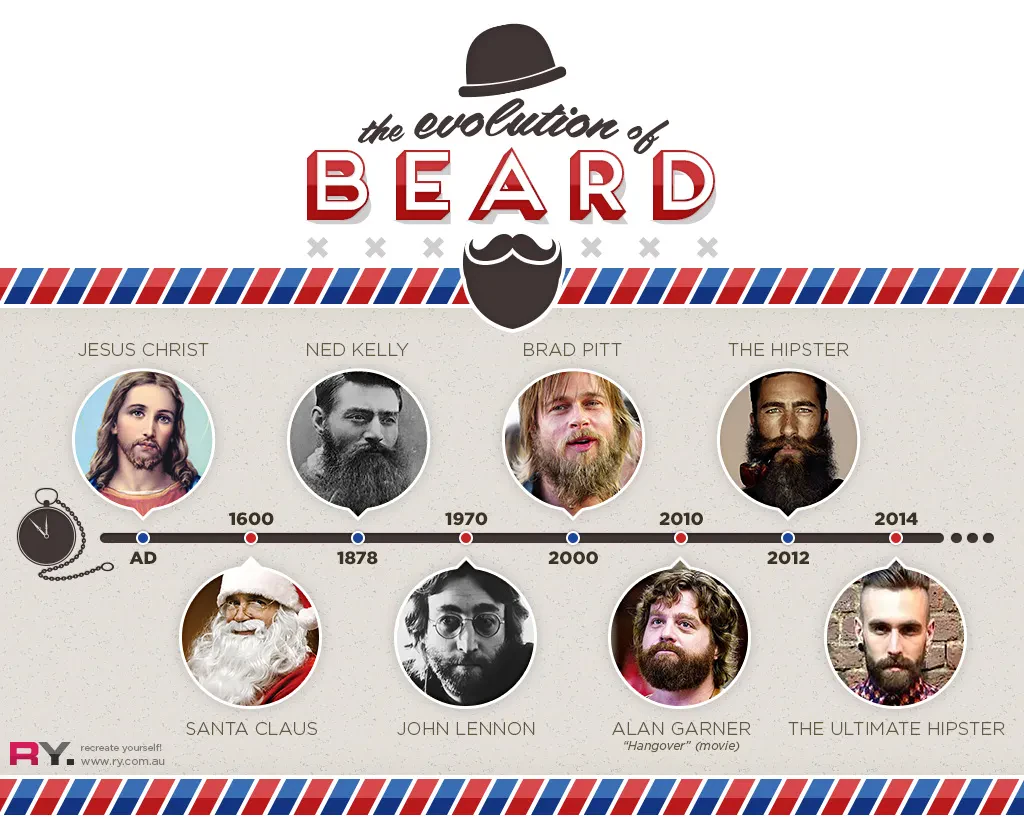
Let’s face it, beards have been around for as long as men have. But the way we style and even interpret them has changed drastically over the centuries. Think about it: a full, flowing beard might have signified wisdom and power in one era, while a perfectly sculpted goatee represented sophistication in another. It’s a fascinating journey through fashion, societal norms, and even practicality.

Way back when, in prehistoric times, beards were probably more about practicality than fashion. Think warmth and protection from the elements. A thick beard could be a lifesaver in a harsh climate. Not exactly a carefully sculpted masterpiece, but certainly functional!
Ancient civilizations like the Egyptians and Greeks had some pretty interesting takes on beards. For some, a well-groomed beard was a symbol of status, power, and masculinity. Think pharaohs with their regal beards – total boss vibes. Others, like certain Greek philosophers, went for a more natural, less manicured look, reflecting different values and ideals.

Then we jump ahead to the medieval period. Beards were generally quite long and often incorporated into elaborate hairstyles, showcasing a man’s social standing. The length and style of your beard could even indicate your profession or religious beliefs.
The Renaissance brought with it a more refined approach to beards. Think neatly trimmed styles and goatees, reflecting a more polished and sophisticated aesthetic. Kings and noblemen set the trends, influencing the styles of commoners.

The 17th and 18th centuries saw some significant shifts. Wigs became all the rage, often obscuring beards completely, or leading to the popularity of small, carefully trimmed styles that peeked out from beneath them. Clean-shaven was also fashionable in certain circles.
The 19th century brought back the fuller beard in a big way! Think of the classic Victorian-era beards – long, bushy, and often meticulously groomed. This style signified strength, maturity, and respectability.

The early 20th century saw a decline in beard popularity, with clean-shaven faces becoming the norm for many, especially in professional settings. The rise of industrialization and modernism contributed to a shift towards a more streamlined and practical aesthetic.
But guess what? Beards are back! The latter half of the 20th and early 21st centuries have seen a massive resurgence in beard-growing, with numerous styles evolving to suit different tastes. Hipsters, lumberjacks, and everyone in between – there’s a beard style for you.

From the full, bushy beard to the neatly trimmed goatee, the short boxed beard, and everything in between, the options are endless. And we’re not just talking about length anymore; we’ve got beard sculpting, braiding, and even dying! It’s a whole new level of facial hair artistry.
Popular Beard Styles in 2024
- Full beard
- Short boxed beard
- Goatee
- Van Dyke
- Balbo
- Anchor beard
- Circle beard
The great thing about beards in 2024 is that there really are no rules. Find a style that suits your face shape, your personal style, and your lifestyle. Experiment, have fun, and embrace your inner beard guru!
So there you have it, a whirlwind tour through the history of beard styles. From practical necessity to a symbol of status, to a trendy fashion statement, the beard has held a remarkable place in the history of men’s fashion. And it seems that its journey is far from over.